
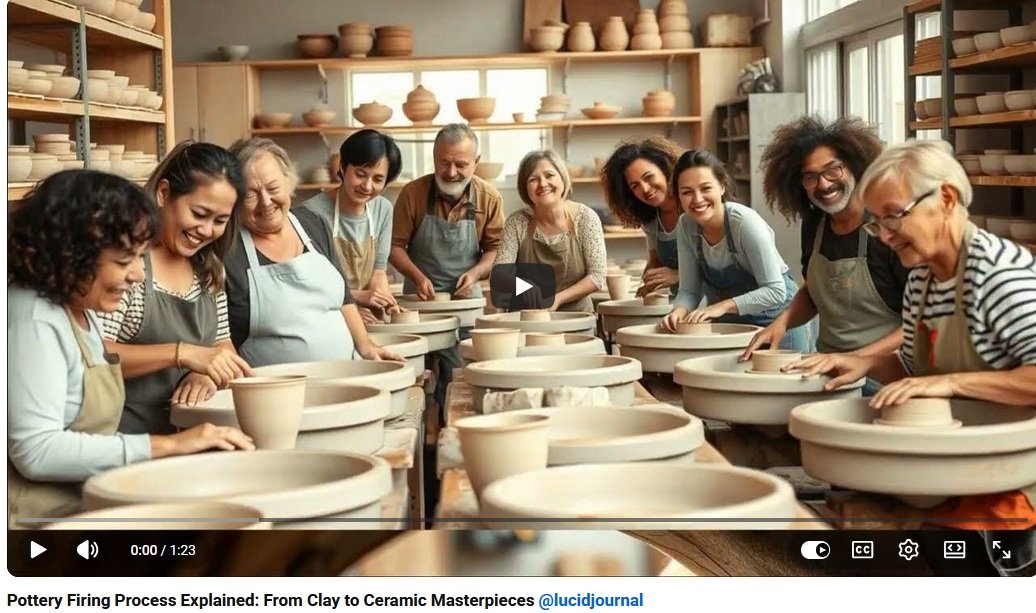
Few moments in pottery are as exciting as opening a kiln after a firing. What began as soft clay has been transformed into a durable ceramic piece capable of lasting for generations. The pottery firing process is where science, craftsmanship, and art come together. Understanding how firing works helps ceramic artists create stronger, more beautiful pottery while avoiding common mistakes.
Whether you are a beginner exploring pottery for the first time or an experienced ceramic artist seeking better results, understanding the firing process is essential. Every successful mug, bowl, vase, sculpture, or decorative ceramic piece depends on proper kiln firing.
What Is the Pottery Firing Process?
The pottery firing process uses a kiln to heat clay to extremely high temperatures. During firing, physical and chemical changes occur within the clay body. Water is removed, minerals fuse together, and the clay permanently hardens into ceramic material.
Without firing, clay remains fragile and can easily dissolve in water. The kiln transforms clay into a strong, lasting material suitable for art, decoration, and practical use.
Why Pottery Firing Is Important
Firing is one of the most critical stages of pottery making because it:
- Hardens clay permanently
- Increases durability
- Makes pottery water resistant
- Prepares pieces for glazing
- Enhances strength and functionality
- Creates finished ceramic art
Proper firing allows pottery to survive everyday use while maintaining its beauty and structure.
Stage 1: Greenware
Before pottery enters the kiln, it is known as greenware. Greenware refers to unfired clay that has been shaped and allowed to dry completely.
At this stage, the clay is extremely fragile. Even small bumps or pressure can break delicate pieces. Pottery must be completely dry before firing because trapped moisture can turn into steam inside the kiln and cause cracking or explosions.
Many ceramic artists allow their work to dry slowly for several days or even weeks depending on the size and thickness of the piece.
Stage 2: The Bisque Firing
The first kiln firing is called the bisque firing. This firing transforms dry greenware into bisque ware, which is stronger and easier to handle.
During bisque firing:
- Remaining moisture is removed
- Organic materials burn away
- Clay particles begin bonding together
- The pottery becomes hard but remains porous
The porous nature of bisque ware allows it to absorb glaze effectively during the next stage.
Typical Bisque Firing Temperatures
Most bisque firings occur between approximately 1,650°F and 1,950°F (900°C to 1,065°C), depending on the clay body and studio practices.
After the bisque firing, pottery is significantly stronger than greenware but still not fully finished.
Stage 3: Glazing the Pottery
After bisque firing, artists apply glaze to their pottery. Glaze is a special coating that melts during firing to create a glass-like surface.
Glaze serves both decorative and practical purposes. It can:
- Add color
- Create glossy or matte finishes
- Improve durability
- Make pottery waterproof
- Create unique artistic effects
Many ceramic artists consider glazing one of the most creative stages of pottery making.
Stage 4: Glaze Firing
Once glazing is complete, the pottery returns to the kiln for a second firing known as the glaze firing.
During this firing:
- Glazes melt and fuse to the clay surface
- Colors develop fully
- The ceramic body becomes stronger
- The final surface finish is created
The glaze firing temperature depends on the clay and glaze being used. Different temperatures create different visual and structural results.
Understanding Kilns
A kiln is a specialized oven designed to reach temperatures far beyond those used in normal cooking appliances. Pottery kilns allow artists to carefully control heating and cooling cycles.
The most common kiln types include:
Electric Kilns
Electric kilns are widely used in schools, studios, and home pottery workshops. They are popular because they are relatively easy to operate and provide consistent firing results.
Gas Kilns
Gas kilns use propane or natural gas. Many ceramic artists enjoy the atmospheric effects produced by gas firing, which can create unique colors and surface variations.
Wood-Fired Kilns
Wood-fired kilns represent one of the oldest pottery firing traditions. Ash from the burning wood can create natural glaze effects and distinctive surface textures.
Raku Kilns
Raku firing involves removing pottery from the kiln while it is still glowing hot and placing it into combustible materials. This technique produces dramatic crackle patterns and unique finishes.
Low-Fire, Mid-Fire, and High-Fire Pottery
Different pottery clay bodies require different firing temperatures.
Low-Fire Pottery
- Usually earthenware clay
- Lower firing temperatures
- Bright glaze colors
- Popular in schools and beginner pottery programs
Mid-Fire Pottery
- Often stoneware clay
- Excellent durability
- Wide glaze selection
- Common in pottery studios
High-Fire Pottery
- Typically stoneware and porcelain
- Very durable
- Dense ceramic body
- Often used for professional functional pottery
Common Pottery Firing Problems
Even experienced ceramic artists occasionally encounter firing problems. Understanding common issues can help prevent disappointment.
Cracking
Cracks often occur when pottery dries unevenly or contains trapped moisture before firing.
Warping
Uneven wall thickness or improper support during firing can cause pieces to warp.
Glaze Running
Applying glaze too heavily or firing beyond the recommended temperature can cause glaze to run.
Pinholes
Tiny holes in glaze surfaces may result from trapped gases escaping during firing.
Crazing
Fine crack patterns in glaze can occur when the glaze and clay body expand and contract at different rates.
Cooling Is Part of the Process
Many beginners think firing ends when the kiln reaches peak temperature, but cooling is equally important. Pottery should cool slowly inside the kiln.
Opening the kiln too early can cause thermal shock, leading to cracks or breakage. Patience during cooling often results in stronger, more successful pottery.
Safety Tips for Pottery Firing
- Follow kiln manufacturer instructions.
- Use proper ventilation.
- Wear appropriate safety equipment.
- Keep flammable materials away from kilns.
- Never touch hot pottery.
- Allow kilns to cool completely before opening.
Safety should always be a priority when working with high-temperature equipment.
How Firing Supports 3D Art Education
The pottery firing process teaches artists valuable lessons about transformation, materials, chemistry, and design. Students learn how raw materials evolve through controlled heat and careful craftsmanship.
For learners at 3DArtSchool.net, understanding firing deepens appreciation for three-dimensional art and reinforces concepts used in sculpture, product design, manufacturing, engineering, and digital modeling.
The Magic of Opening the Kiln
One of the most rewarding experiences in pottery is opening the kiln after a successful firing. Colors emerge, textures appear, and clay becomes ceramic. Even experienced artists feel excitement and anticipation when seeing finished work for the first time.
Every firing teaches new lessons. Sometimes results are exactly as planned, while other times unexpected effects create exciting artistic discoveries.
Final Thoughts
The pottery firing process is the heart of ceramic art. From fragile greenware to durable finished pottery, firing transforms simple clay into lasting creations. Understanding bisque firing, glaze firing, kiln operation, temperature ranges, and cooling techniques allows artists to create stronger and more beautiful work.
Whether you dream of making functional pottery, decorative ceramics, or sculptural masterpieces, mastering the firing process is an essential step on your creative journey. Every successful piece that emerges from the kiln represents a blend of patience, skill, science, and artistic vision.
Pottery Related Articles