
Can You Make Money Selling Pottery? A Guide for Ceramic Artists and Makers
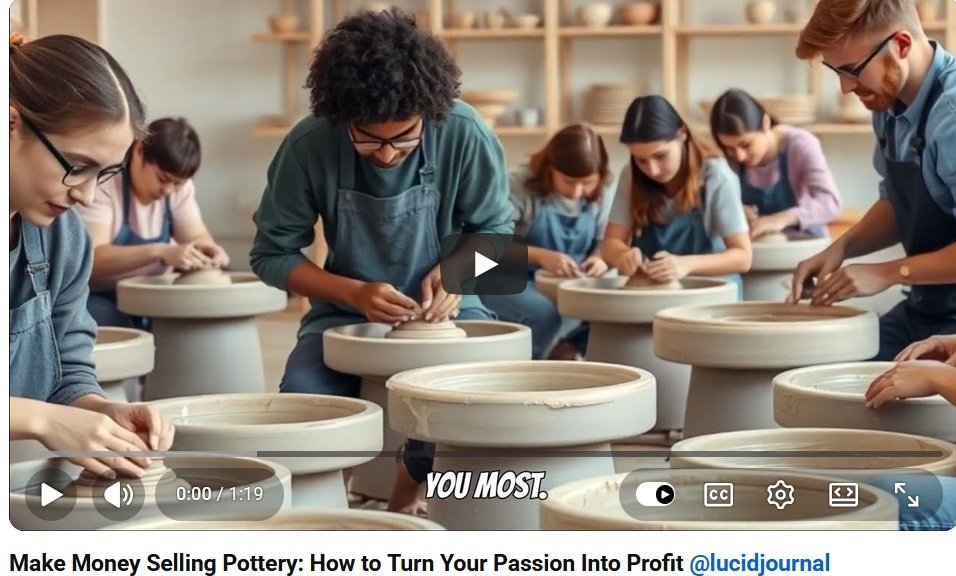
Many people discover pottery as a creative hobby, but eventually ask an important question: Can you make money selling pottery? The answer is yes. Thousands of ceramic artists around the world earn income from handmade pottery, ceramic sculptures, pottery classes, custom commissions, and online sales.
While building a successful pottery business takes time, dedication, and smart marketing, it is entirely possible to turn your passion for clay into a profitable creative venture. Whether you want a side income or a full-time career, there are numerous opportunities available to modern ceramic artists.
This guide explores how pottery makers can generate income, attract customers, price their work, and grow a sustainable pottery business.
Why Handmade Pottery Is Valuable
In a world filled with mass-produced products, many consumers appreciate the uniqueness of handmade goods. Handmade pottery offers something factory-made products cannot provide: individuality, craftsmanship, and personal connection.
Customers often value pottery because it is:
- Handcrafted
- Unique
- Functional
- Artistic
- Gift-worthy
- Environmentally friendly
- Made by real artists
These qualities allow ceramic artists to charge premium prices for their work.
How Much Money Can Pottery Artists Make?
Income varies widely depending on skill level, product quality, marketing efforts, pricing, and business strategy.
Some hobbyists earn a few hundred dollars per month selling pottery at local markets, while professional ceramic artists may generate thousands of dollars monthly through multiple revenue streams.
Successful pottery businesses often combine product sales with education, commissions, workshops, and online content creation.
1. Selling Functional Pottery
Functional pottery remains one of the most popular ways to earn money as a ceramic artist.
Popular items include:
- Mugs
- Coffee cups
- Bowls
- Dinner plates
- Serving dishes
- Tea sets
- Soap dishes
- Kitchen accessories
Customers often purchase handmade pottery because they enjoy using beautiful, unique objects in everyday life.
2. Selling Decorative Pottery
Not all pottery needs to be functional. Decorative ceramic art appeals to collectors, interior designers, and gift buyers.
Examples include:
- Sculptures
- Vases
- Wall art
- Decorative bowls
- Garden pottery
- Ceramic masks
- Fantasy-themed pieces
Artists with distinctive styles often build loyal customer bases around decorative work.
3. Creating Custom Pottery Commissions
Custom work can be highly profitable because clients pay for personalized creations.
Common commission requests include:
- Wedding gifts
- Pet memorials
- Family name plaques
- Custom mugs
- Business awards
- Personalized sculptures
- Garden art
Custom commissions allow artists to charge higher prices because each piece is designed specifically for the client.
4. Selling Pottery Online
The internet has made it easier than ever for ceramic artists to reach customers worldwide.
Popular online selling options include:
- Your own website
- Online marketplaces
- Social media shops
- Artist platforms
- Local e-commerce stores
A professional website gives artists greater control over branding, pricing, and customer relationships.
5. Teaching Pottery Classes
Many successful ceramic artists generate income by teaching others.
Teaching opportunities include:
- In-person pottery classes
- Workshops
- Private lessons
- Community education programs
- Online courses
- Video tutorials
Teaching not only creates additional income but also establishes credibility and authority within the pottery community.
6. Selling Pottery Patterns and Tutorials
Artists can create digital products that generate passive income.
Examples include:
- Pottery project guides
- Technique tutorials
- Educational PDFs
- Lesson plans
- Beginner pottery courses
- Video training programs
Digital products can be sold repeatedly without additional material costs.
7. Participating in Art Shows and Craft Fairs
Art fairs and craft markets remain popular places for pottery sales.
Benefits include:
- Direct customer interaction
- Immediate sales
- Brand visibility
- Networking opportunities
- Customer feedback
Many ceramic artists build strong local followings through regular participation in community events.
8. Selling Seasonal Pottery
Holiday and seasonal pottery can generate significant sales during certain times of the year.
Popular seasonal products include:
- Christmas ornaments
- Halloween decorations
- Valentine gifts
- Easter pottery
- Autumn-themed ceramics
- Holiday serving dishes
Seasonal collections often encourage repeat purchases from existing customers.
9. Creating a Pottery Brand
Successful ceramic businesses often develop recognizable brands.
Your brand may include:
- A memorable business name
- A consistent visual style
- A unique pottery aesthetic
- A compelling artist story
- Professional photography
- A strong online presence
Customers are more likely to remember and recommend artists with clear and distinctive branding.
How to Price Pottery Correctly
Pricing is one of the most challenging aspects of selling pottery. Many artists underestimate the value of their work.
When calculating prices, consider:
- Clay costs
- Glaze costs
- Kiln expenses
- Tool expenses
- Studio overhead
- Packaging materials
- Marketing costs
- Labor time
- Skill level
Your time and expertise have value. Pricing should reflect both material costs and artistic effort.
Marketing Pottery Successfully
Even beautiful pottery will not sell if potential customers never see it.
Effective pottery marketing strategies include:
- Professional photography
- Social media posting
- Email newsletters
- Artist blogs
- Video content
- Local events
- Customer testimonials
- Search engine optimization (SEO)
Consistent marketing helps build awareness and trust over time.
Building a Pottery Website
A dedicated website can become the center of your pottery business.
Your website can include:
- Online store
- Artist biography
- Portfolio gallery
- Class information
- Blog articles
- Commission request forms
- Customer reviews
For artists associated with 3DArtSchool.net, educational content can also attract aspiring ceramic artists and pottery enthusiasts.
Common Challenges Pottery Businesses Face
Every pottery business encounters obstacles.
Common challenges include:
- Production time
- Kiln costs
- Shipping fragile items
- Marketing competition
- Pricing concerns
- Inventory management
Successful artists overcome these challenges through planning, organization, and continuous learning.
Multiple Income Streams Create Stability
Many full-time ceramic artists rely on several income sources instead of a single revenue stream.
Examples include:
- Pottery sales
- Workshops
- Online courses
- Commissions
- Membership programs
- Digital products
- Affiliate partnerships
- Art exhibitions
Diversifying income can provide greater financial stability.
How Pottery Supports Other Creative Careers
Pottery skills can lead to opportunities in:
- Sculpture
- Product design
- Industrial design
- Teaching
- Architecture
- Animation
- 3D modeling
- Creative entrepreneurship
The design principles learned through pottery apply across many creative industries.
Success Tips for New Pottery Entrepreneurs
- Develop your skills consistently.
- Create a recognizable style.
- Photograph your work professionally.
- Build an online presence.
- Price your work fairly.
- Listen to customer feedback.
- Keep learning and experimenting.
- Stay patient and persistent.
Building a successful pottery business takes time, but steady effort often produces lasting results.
Final Thoughts
Yes, you can absolutely make money selling pottery. Handmade ceramics continue to attract customers who appreciate craftsmanship, creativity, and unique artistic expression. Whether you sell mugs, sculptures, decorative art, custom commissions, classes, or digital products, there are numerous ways to generate income as a ceramic artist.
The key is combining artistic skill with smart business practices. By creating quality work, developing a recognizable brand, marketing effectively, and building multiple income streams, pottery can become far more than a hobby—it can become a rewarding and profitable creative business.
Every successful ceramic entrepreneur started with a single piece of clay. Your pottery journey could be the beginning of something much bigger than you imagine.
Pottery Related Articles
The History of Pottery: How Ancient Ceramic Art Shapes Modern Creations

Pottery is one of humanity's oldest and most enduring art forms. Long before metal tools, modern technology, or digital design, people shaped clay into practical and decorative objects that helped build civilizations. Ancient pottery tells stories about culture, trade, religion, daily life, and artistic expression. Today, ceramic artists continue to draw inspiration from techniques and traditions developed thousands of years ago.
The history of pottery is more than a timeline of objects. It is the story of human creativity, innovation, and the desire to transform natural materials into something useful and beautiful. Understanding this history helps modern artists appreciate the deep roots of ceramic art and discover new inspiration for their own creations.
The Origins of Pottery
Archaeologists believe some of the earliest pottery dates back more than 20,000 years. Ancient people discovered that clay could be shaped, dried, and hardened by heat. These early ceramic vessels were often used for storing food, carrying water, cooking meals, and preserving supplies.
Unlike wood, fabric, or plant materials, pottery could survive for thousands of years. Because of this durability, ancient pottery provides valuable clues about early human societies.
Many of the world's oldest ceramic fragments have been discovered in East Asia, where early cultures experimented with clay long before the rise of agriculture.
Pottery in Ancient Civilizations
Ancient Mesopotamia
Mesopotamia, often called the cradle of civilization, played a major role in the development of pottery. Located between the Tigris and Euphrates Rivers, this region produced some of the earliest cities and advanced ceramic traditions.
Mesopotamian potters created:
- Storage jars
- Cooking vessels
- Decorative pottery
- Religious objects
- Trade containers
As pottery techniques improved, artists began adding painted designs, geometric patterns, and symbolic imagery.
Ancient Egypt
Pottery was an important part of Egyptian daily life. Ancient Egyptians used clay to create bowls, jars, cups, figurines, and burial objects.
Many pottery pieces discovered in tombs reveal information about Egyptian culture, religion, and trade. Egyptian artisans also developed glazed ceramics known as faience, which produced bright blue and green surfaces that remain iconic today.
Ancient China
China made some of the most significant contributions to ceramic history. Chinese potters developed advanced kiln technologies and eventually perfected porcelain.
Chinese ceramics became highly prized around the world because of their beauty, craftsmanship, and technical excellence.
Important Chinese pottery achievements include:
- Porcelain production
- Celadon glazes
- Blue-and-white ceramics
- High-temperature firing techniques
- Advanced decorative methods
Many modern ceramic artists continue to study Chinese pottery traditions.
Ancient Greece
Greek pottery is famous for its storytelling. Artists decorated ceramic vessels with scenes from mythology, sports, warfare, and everyday life.
Greek pottery styles often featured:
- Black-figure painting
- Red-figure painting
- Mythological narratives
- Detailed human figures
- Elegant vessel shapes
These works demonstrate how pottery can serve as both functional art and historical record.
The Invention of the Pottery Wheel
One of the most important developments in ceramic history was the invention of the pottery wheel. Early pottery was created entirely by hand using pinch pots, coils, and slabs.
The pottery wheel allowed artists to create more symmetrical forms with greater speed and precision. This innovation transformed pottery production and helped support growing populations by making ceramic goods more accessible.
Today, wheel throwing remains one of the most popular pottery techniques in studios around the world.
Pottery During the Middle Ages
As civilizations expanded, pottery styles evolved across Europe, Asia, Africa, and the Middle East. During the Middle Ages, ceramic artists developed regional traditions that reflected local cultures and resources.
Pottery was used for:
- Food storage
- Cooking
- Religious ceremonies
- Trade
- Decoration
Advances in kiln technology and glazing techniques led to stronger, more colorful ceramics.
The Rise of Decorative Pottery
Over time, pottery became more than a practical necessity. Wealthy households began collecting decorative ceramics as symbols of status and refinement.
Artists experimented with:
- Intricate glazing
- Detailed painting
- Carved surfaces
- Luxury materials
- Complex firing techniques
Pottery evolved into a respected art form alongside painting, sculpture, and architecture.
Traditional Pottery Around the World
Many cultures developed distinctive pottery traditions that continue today.
Native American Pottery
Many Native American communities created pottery decorated with symbolic designs, geometric patterns, and cultural stories. These traditions remain an important part of cultural heritage and artistic expression.
African Pottery
African pottery often features hand-built techniques, textured surfaces, and community-centered production methods. Pottery continues to play both practical and ceremonial roles in many regions.
Japanese Ceramics
Japanese pottery traditions emphasize simplicity, natural beauty, and craftsmanship. Styles such as Raku, Shino, and Bizen continue to influence ceramic artists worldwide.
Mexican Pottery
Mexican ceramic traditions combine Indigenous techniques with influences introduced during colonial periods. Bright colors, decorative patterns, and folk-art styles remain popular today.
The Industrial Revolution and Pottery
The Industrial Revolution transformed pottery production by introducing mechanized manufacturing techniques. Factories could produce ceramic goods faster and in larger quantities than traditional workshops.
While mass production increased accessibility, many artists continued to value handmade pottery for its uniqueness and craftsmanship.
This tension between handmade and machine-made ceramics still exists today.
Modern Pottery and Contemporary Ceramic Art
Modern ceramic artists blend ancient traditions with contemporary creativity. Today's pottery world includes:
- Functional pottery
- Fine art ceramics
- Sculptural works
- Architectural ceramics
- Experimental clay art
- Digital design integration
Artists now combine traditional hand-building and wheel-throwing techniques with modern tools, materials, and technologies.
How Ancient Pottery Influences Modern Artists
Many modern ceramic artists study historical pottery to gain inspiration and technical knowledge. Ancient ceramics teach lessons about:
- Form and proportion
- Surface decoration
- Storytelling through art
- Cultural symbolism
- Material mastery
- Creative problem solving
Historical pottery reminds artists that creativity connects generations across time.
Pottery and 3D Art Education
Pottery remains one of the best ways to learn three-dimensional design. Working with clay teaches:
- Volume
- Balance
- Structure
- Texture
- Spatial thinking
- Surface design
For students at 3DArtSchool.net, pottery provides hands-on experience with concepts that also apply to sculpture, industrial design, architecture, animation, and digital modeling.
Why Pottery Remains Popular Today
Despite modern technology, pottery continues to attract artists, hobbyists, and students around the world. Many people find working with clay relaxing, creative, and deeply rewarding.
Pottery offers something increasingly rare in a digital age: a direct connection between the artist's hands and the finished work.
Every handmade piece reflects personal effort, creativity, and craftsmanship.
Lessons Modern Artists Can Learn from Ancient Pottery
- Master the fundamentals.
- Value craftsmanship.
- Study historical techniques.
- Tell stories through design.
- Experiment with materials.
- Respect cultural traditions.
- Combine innovation with tradition.
These lessons remain just as relevant today as they were thousands of years ago.
Final Thoughts
The history of pottery is a remarkable journey that spans thousands of years and countless cultures. From the earliest clay vessels to modern ceramic sculptures, pottery has served practical, artistic, and cultural purposes throughout human history.
Ancient potters developed techniques, tools, and artistic traditions that continue to inspire creators today. By studying the past, modern ceramic artists gain valuable insights into craftsmanship, creativity, and design.
Whether you are shaping your first pinch pot or creating advanced ceramic art, you are participating in one of humanity's oldest creative traditions. Every piece of pottery carries forward a legacy that began thousands of years ago and continues to evolve with each new generation of artists.
Pottery Related Articles