
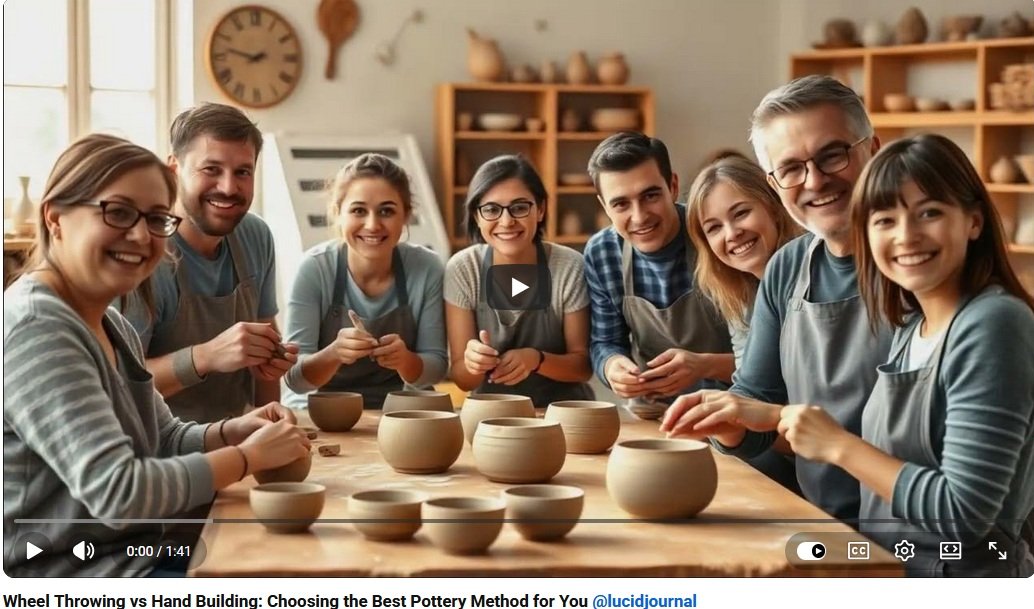
One of the first decisions new ceramic artists face is whether to learn wheel throwing or hand building pottery. Both methods have been used for centuries to create beautiful ceramic art, functional pottery, and sculptural works. Each technique offers unique advantages, challenges, and creative opportunities.
If you are new to pottery, understanding the differences between wheel throwing and hand building can help you choose the best path for your artistic goals. The good news is that neither method is better than the other. They simply offer different experiences and outcomes.
For students and artists at 3DArtSchool.net, both techniques provide valuable lessons in three-dimensional design, creativity, and craftsmanship.
What Is Wheel Throwing?
Wheel throwing is the process of shaping clay on a rotating pottery wheel. The artist centers a lump of clay on the wheel and uses their hands to form symmetrical shapes such as bowls, mugs, cups, plates, and vases.
Wheel throwing is often the first pottery technique people imagine when they think about ceramics. Watching clay transform on a spinning wheel can be mesmerizing and rewarding.
The process generally includes:
- Centering the clay
- Opening the clay form
- Pulling the walls upward
- Shaping the piece
- Trimming after partial drying
- Firing and glazing
What Is Hand Building?
Hand building is a pottery technique that shapes clay without using a wheel. Artists create forms using their hands and simple tools. This method offers complete freedom in shape, size, and design.
The three main hand building techniques are:
- Pinch Pots – Formed by pinching a ball of clay into shape.
- Coil Building – Made by stacking and blending rolled coils of clay.
- Slab Building – Constructed from flat sheets of clay.
Hand building is often recommended for beginners because it requires fewer tools and allows artists to focus on understanding the clay.
Wheel Throwing Advantages
1. Perfect Symmetry
One of the biggest advantages of wheel throwing is the ability to create symmetrical forms. Round bowls, plates, cups, and vases are easier to achieve on a pottery wheel than through hand building.
2. Faster Production
Once artists develop their skills, wheel throwing can produce multiple similar pieces quickly. This is particularly useful for artists who want to create matching dinnerware sets or pottery collections.
3. Professional Appearance
Many people appreciate the smooth, balanced, and refined appearance of wheel-thrown pottery. The clean curves and symmetry often create a polished look.
4. Exciting Learning Experience
Many artists find wheel throwing exciting because it combines movement, timing, and touch. The spinning wheel creates a unique creative experience unlike any other art form.
Wheel Throwing Challenges
Steep Learning Curve
Centering clay on a wheel can be difficult for beginners. Many new potters spend weeks practicing before they consistently create successful forms.
Equipment Costs
A pottery wheel can be a significant investment. While pottery studios often provide equipment, purchasing a wheel for home use can cost hundreds or even thousands of dollars.
Limited Shapes
Wheel throwing excels at round forms, but unusual shapes, sharp angles, and complex sculptures are more difficult to create.
Hand Building Advantages
1. Beginner Friendly
Hand building allows beginners to start creating immediately without learning how to operate a pottery wheel. It teaches clay handling skills that form a strong artistic foundation.
2. Lower Cost
Hand building requires only clay and a few basic tools. This makes it one of the most affordable ways to begin learning pottery.
3. Unlimited Creativity
Hand building offers incredible freedom. Artists can create abstract sculptures, architectural forms, animal figures, decorative wall art, boxes, planters, and designs that would be impossible on a wheel.
4. Better for Sculptural Work
Many ceramic sculptors prefer hand building because it allows them to construct unique shapes and detailed forms without the limitations of symmetry.
Hand Building Challenges
Time-Consuming Process
Hand building often requires more time because each piece must be shaped and assembled manually.
Less Uniform Results
Creating identical pieces can be difficult. Handmade items often vary slightly in size and shape.
Structural Considerations
Artists must pay close attention to wall thickness, support structures, and drying times to avoid cracking or warping.
Comparing the Creative Possibilities
Wheel throwing and hand building both encourage creativity, but they inspire different approaches.
| Wheel Throwing | Hand Building |
|---|---|
| Symmetrical forms | Organic shapes |
| Mugs and bowls | Sculptures and wall art |
| Matching pottery sets | One-of-a-kind creations |
| Fast production | Detailed customization |
| Round vessels | Geometric and abstract forms |
Artists often discover that combining both methods leads to the most creative results.
Which Method Is Better for Beginners?
Many pottery instructors recommend starting with hand building because it teaches the fundamentals of clay behavior. Beginners learn about moisture content, structure, joining techniques, and surface decoration before introducing the complexities of wheel throwing.
However, if your primary goal is to create mugs, bowls, and other round vessels, learning wheel throwing early may be the right choice.
The best method depends on your personal interests and artistic goals.
Can You Learn Both?
Absolutely. In fact, many professional ceramic artists use both wheel throwing and hand building in their work. A wheel-thrown vase may include hand-built decorations. A sculptural piece may contain wheel-thrown components.
Learning both techniques expands your creative possibilities and helps you become a more versatile artist.
How Pottery Supports 3D Design Skills
Whether you choose wheel throwing or hand building, pottery strengthens valuable three-dimensional thinking skills. Artists learn about volume, balance, proportion, texture, and form.
These skills transfer directly into sculpture, industrial design, architecture, animation, game development, and digital 3D modeling.
Students at 3DArtSchool.net can benefit greatly from pottery because it teaches the same design principles used in many modern creative industries.
Choosing the Right Path for You
If you enjoy precision, symmetry, and creating functional pottery, wheel throwing may be your ideal starting point.
If you prefer artistic freedom, sculptural work, and experimental forms, hand building may be the better choice.
Many artists discover they love both methods and use them together throughout their creative journey.
Final Thoughts
Wheel throwing and hand building are two exciting paths into the world of pottery. Each method offers unique rewards, creative opportunities, and challenges. Rather than choosing one over the other permanently, consider exploring both techniques to discover what inspires you most.
Pottery is ultimately about creativity, self-expression, and learning through experience. Whether your hands are shaping clay on a spinning wheel or building forms piece by piece, every project helps you grow as an artist.
The best pottery method is the one that keeps you excited to create, experiment, and continue learning.
Pottery Related Articles