
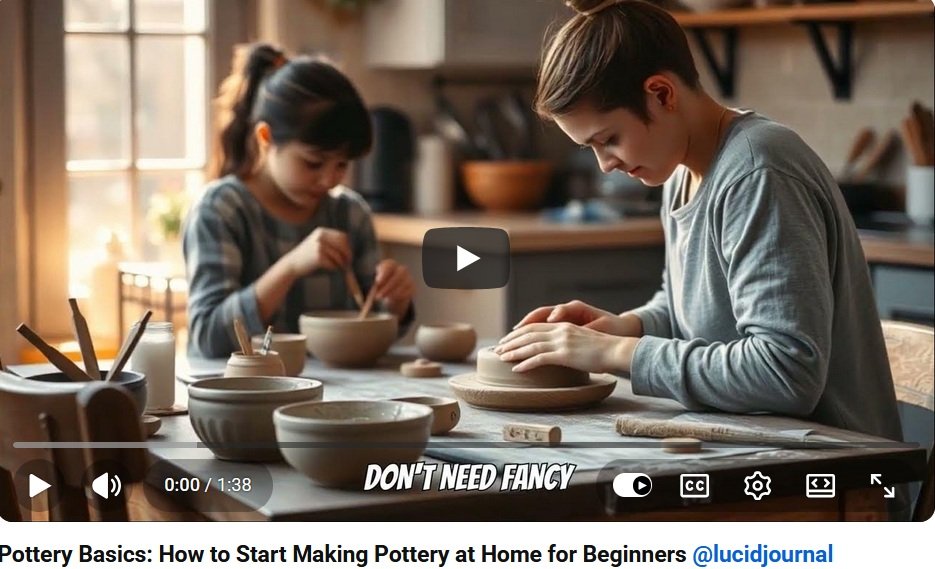
Pottery is one of the most rewarding art forms for beginners because it combines creativity, patience, and hands-on craftsmanship. Whether you dream of making handmade mugs, decorative bowls, ceramic planters, wall art, or sculptural pieces, pottery gives you the chance to turn simple clay into something beautiful and useful.
For students, hobbyists, and artists visiting 3DArtSchool.net, pottery is a wonderful way to explore texture, form, design, and personal expression. You do not need to be a professional artist to begin. With a few basic tools, the right clay, and a willingness to practice, you can start creating ceramic art at home, in a studio, or in a classroom.
What Is Pottery?
Pottery is the art of shaping clay into objects that are usually dried, fired in a kiln, and often glazed for color, strength, and beauty. Pottery can be functional, decorative, or purely artistic. Common pottery items include cups, plates, bowls, vases, tiles, sculptures, and garden pieces.
At its heart, pottery is about shaping earth with your hands. That simple process has connected people across cultures for thousands of years, and it remains popular today because it is calming, creative, and deeply satisfying.
Why Pottery Is Great for Beginners
Pottery is beginner-friendly because there are many ways to start. You do not have to begin with a pottery wheel. Many new artists begin with hand building techniques, which allow you to shape clay using only your hands and simple tools.
Pottery also teaches patience. Clay must be shaped, dried, fired, glazed, and fired again in many cases. Each step helps beginners understand the creative process. Mistakes are part of learning, and every piece teaches you something new.
Basic Pottery Tools for Beginners
You do not need a large studio to begin learning pottery. Some basic pottery tools include:
- Clay: The main material used to create pottery.
- Rolling pin: Useful for flattening clay slabs.
- Needle tool: Helps cut, trim, and score clay.
- Wire cutter: Used to slice blocks of clay.
- Sponge: Helps smooth surfaces and control moisture.
- Wooden modeling tools: Used for shaping and carving.
- Rib tool: Helps smooth and shape clay forms.
- Brushes: Used for applying slip, underglaze, or glaze.
As you grow more confident, you may want to try a pottery wheel, carving tools, texture stamps, molds, and more advanced glazing supplies.
Choosing the Right Clay
Choosing the right clay is important for beginner pottery projects. The most common clay types include earthenware, stoneware, and porcelain.
Earthenware clay is often used for decorative pottery and beginner projects. It is easy to shape and usually fires at a lower temperature.
Stoneware clay is stronger and commonly used for mugs, bowls, plates, and everyday pottery. It is a great choice for beginners who want to make functional ceramic pieces.
Porcelain clay is smooth and elegant, but it can be more difficult for beginners because it is less forgiving and requires careful handling.
For most beginners, stoneware or earthenware is a good place to start.
Beginner Pottery Techniques
1. Pinch Pottery
Pinch pottery is one of the easiest beginner techniques. You start with a ball of clay, press your thumb into the center, and gently pinch the sides to form a small bowl, cup, or vessel. This method helps beginners understand clay thickness and hand control.
2. Coil Building
Coil building uses long rolled ropes of clay stacked on top of each other. Coils can be blended together for a smooth surface or left visible for texture. This technique is great for making vases, pots, and sculptural forms.
3. Slab Building
Slab building uses flat sheets of clay to create boxes, trays, tiles, wall art, and geometric forms. Beginners often enjoy slab building because it feels similar to construction or design work.
4. Wheel Throwing
Wheel throwing uses a spinning pottery wheel to shape clay into round forms such as bowls, mugs, and vases. It takes practice, but many beginners find it exciting once they learn how to center the clay and pull up the walls.
Understanding the Pottery Process
Most pottery follows several basic stages:
- Wedging: Preparing the clay by removing air bubbles.
- Shaping: Creating the form by hand building or wheel throwing.
- Drying: Allowing the clay to become leather-hard or bone dry.
- Bisque firing: First kiln firing that hardens the clay.
- Glazing: Adding color, shine, or surface design.
- Glaze firing: Final firing that melts the glaze onto the pottery.
Each stage matters. Rushing the drying or firing process can cause cracks, warping, or breakage.
Easy Pottery Projects for Beginners
If you are new to pottery, start with simple projects that help you build confidence. Good beginner pottery projects include:
- Pinch pots
- Small bowls
- Clay beads
- Decorative tiles
- Plant markers
- Soap dishes
- Small planters
- Handmade mugs
- Coil vases
- Textured wall art
These projects teach the basics of shaping, smoothing, decorating, drying, and glazing.
Common Beginner Pottery Mistakes
Every beginner makes mistakes, but knowing what to watch for can help you improve faster.
Using clay that is too wet can make pieces collapse or lose shape. Making walls too thin can cause cracking or breaking. Trapping air bubbles can lead to problems during firing. Drying pieces too quickly may cause cracks. Applying glaze too thick can create runs or uneven surfaces.
The best way to improve is to slow down, practice often, and treat every mistake as part of the learning process.
Pottery Safety Tips
Pottery is enjoyable, but beginners should also learn basic safety. Avoid breathing dry clay dust by cleaning with a damp sponge instead of sweeping. Wash your hands after handling clay and glaze. Follow all studio rules when using a kiln. If you are working with glazes, make sure they are appropriate for your project, especially if the piece will be used for food or drink.
How Pottery Builds Creativity
Pottery helps artists think in three dimensions. Unlike drawing or painting on a flat surface, pottery teaches shape, balance, weight, texture, and structure. This makes it especially valuable for students interested in sculpture, product design, 3D modeling, animation, or digital art.
For a site like 3DArtSchool.net, pottery connects traditional art with modern 3D creativity. The same design thinking used to shape clay can also help artists understand digital modeling, character design, and object creation.
Can You Learn Pottery at Home?
Yes, beginners can start pottery at home with air-dry clay or beginner clay kits. Air-dry clay does not require a kiln, making it a good option for practice projects. However, traditional ceramic pottery usually needs kiln firing to become strong and permanent.
If you want to make food-safe mugs, bowls, or plates, it is best to use proper ceramic clay and have your pieces fired in a kiln through a local pottery studio, school, or community art center.
Final Thoughts: Start Small and Keep Creating
Pottery for beginners does not have to be complicated. Start with simple tools, basic clay, and easy hand building projects. Learn how clay feels, how it dries, and how shapes respond to your hands. Over time, you can explore wheel throwing, glazing, firing, and more advanced ceramic techniques.
The most important step is to begin. Your first pottery piece does not need to be perfect. It only needs to teach you something. With practice, patience, and creativity, you can turn clay into beautiful ceramic art that reflects your own style.
Pottery Related Articles